Since 1992
Print and digital marketing
PHOTO: A river restoration specialist at work on the ongoing project. (RLHT photo)
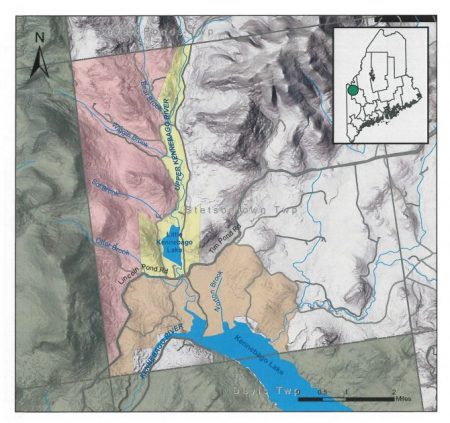
RANGELEY — Rangeley Lakes Heritage Trust is entering the final phase of its effort to acquire land within the Kennebego headwater project area, and is under contract to buy the 5,000-acre Tract 1 parcel.
The trust anticipates closing on the tract, as well as an easement on the Logans and North Shore tracts, on June 30.
This project is an effort to conserve and restore fish and wildlife habitats of national and global importance. The trust intends to bring the land and water back to a condition approximating the pre-European settlement forest. Though much of the Kennebago seems to be unspoiled wilderness, there is a long history of manipulating the watershed’s natural systems to accommodate industrial forest operations. Unlike the pre-settlement forest, which comprised primarily old-growth stands (150-plus year-old trees), today’s industrial forest is young and has undergone repeated harvests on short-cutting rotations.
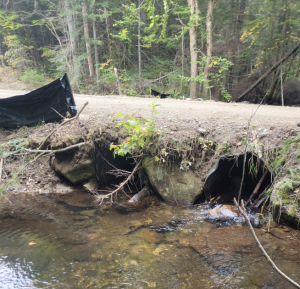
Both short- and long-term strategies are needed. For example, riparian buffers (forests along the water) will eventually produce large wood inputs. It takes decades for that to occur, so manual “chop-and-drop” wood additions are used to accelerate recovery and bolster climate resilience. Replacing road crossings is often the only solution to recover fish passage.
John Field, of Field Geology, will conduct a full geomorphological assessment of the watershed this year.
Stream connectivity is critical for brook trout and other native fish and wildlife species. Recent research shows that brook trout use stream and lake habitats in different life histories and travel farther than previously known. Road crossings with undersized culverts in poor condition fragment critical brook trout habitat. Extreme weather compound fish passage problems related to stream crossings.
Instream work began last summer, and there are already results, including spawning trout that congregated last fall in the sections of Otter Brook.
A major commitment being explored is relocating a segment of the mainstem river to its natural channel and restoring ecological function.
Most of the restoration effort is focused on the 10,300-acre Kennebago Headwaters project area up to the Stetsontown/Seven Ponds township line. Of the river/stream segments outside the project area, those north (and upstream) of the township line are important to the river system’s connectivity and, properly designed, can potentially deliver significant benefits for the downstream fishery within the Kennebago Headwaters project area. Stream crossing work upstream of the township line could comprise as many as four crossings (of an overall project total of 16 crossings).
There are four scheduled stream-crossing replacement project plannes in 2023, eight in 2024, and four in 2025. 2024 and 2025 projects may include as many as four road crossing replacement projects on upstream land.
Working with Trout Unlimited, the trust has identified several wood-addition projects in key tributaries within the project area. They include Otter, Wiggle and Bear brooks, with a wood-loading rate of about 200 pieces for every stream mile.
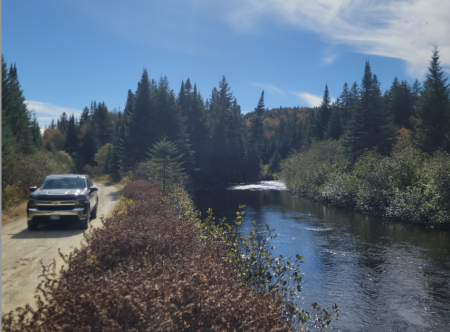
The Little Kennebago River, which was reconfigured to accommodate road construction, may be returned to its natural configuration as part of the project (avove) A map (below) shops the Kennebago Headwaters project in Stetson Township, with the red the tract the Rangeley Lakes Heritage Trust expects to close on June 30, and the yellow and brown showing conservation easements that will also be finalized. (RLHT images)