
Since 1992
Print and digital marketing
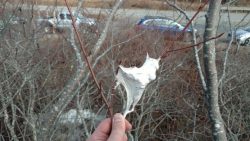
PHOTO: Use hand snips or extendable pole pruners to remove webs within reach from the ground and away from hazards such as power lines. It may be a good idea to hire a professional to do this work if power lines are involved. (Submitted photo)
AUGUSTA – February is Browntail Moth Awareness Month in Maine, when residents are encouraged to take advantage of the dormant season to reduce the impact of the moth in the warmer weather.
Long-lasting threats are deforestation, but the microscopic toxic hairs from the caterpillars are an immediate issue, causing poison ivy-like rashes that can last for weeks, as well as respiratory issues.
According to the Maine Forest Service, brown tail moths have been in an outbreak phase in Maine since 2015 and the pest cannot be eradicated. Most areas of Maine, especially settled areas with significant host tree populations such as oak, apple, crabapple, pear, birch, cherry, and other hardwoods, are at risk of infestation by the caterpillars.
The “four Rs” of dealing with BTM are:
Recognize — Learn how to tell if the trees where you live, work, and play have BTM.
Remove — Use hand snips or extendable pole pruners to remove webs within reach from the ground and away from hazards such as power lines. Protect your eyes and skin from hairs that might be present from past caterpillar activity. After removal, destroy webs by burning or soaking in soapy water for several days, then dispose of the nests in the trash.
Recruit – Hire professionals to treat webs out of reach or near hazards on the property you own or manage. Line up help during winter.
Reach out — If you find BTM in your neighborhood, let your neighbors and town officials know. The more neighbors, businesses, and others get together to respond to the problem, the better the results.
For information about the moth, resources and more, visit maine.gov/dacf/knockoutbtm.
Area BTM awareness events include:
Tuesday, Feb. 2, 6:30 p.m., Hallowell Conservation Commission is hosting Maine Forest Service entomologist Tom Schmeelk for an Informational Meeting on BTM. The meeting is free and open to the public.
Monday, Feb. 8, noon-1 p.m., Viles Arboretum in Augusta will have an in-person event showing steps to manage BTM in your area. Maine Forest Service entomologist Tom Schmeelk will discuss Integrated pest management of BTM. There is a fee of $10. Check the events page on the arboretum website for details.
Thursday, Feb. 17, 7 p.m., Lewiston Auburn Community Forestry Board and Auburn Conservation Commission are teaming up to host an evening discussion on BTM and other invasive pests with Allison Kanoti, director of Maine Forest Service forest health and monitoring. LACFB will ccoordinate a field session in March, details to be determined.


