
Since 1992
Print and digital marketing
LEEDS – The Leeds Historical Society History Center will be open the second and fourth Saturdays of June, July and August, and the society is encouraging area residents to stop by, see the recent renovations and learn more about town history. Hours are 9 to 11 a.m. at the history center, which is in the old Leeds Town House, Route 106.
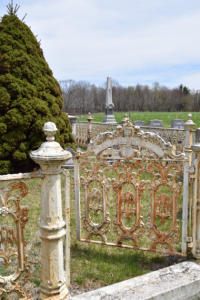 The historical society recently completed its spring series of Saturday historical walks, visiting areas of town and sharing stories about the sites. Another series of walks will be scheduled in the fall.
The first gathering this spring was in the Keene’s Corner area of town, starting at the Leeds Church of the Nazarene, constructed in 1891, which has served many congregations before it became Church of the Nazarene, including Universalist, Methodist and the Metropolitan Association of Wisconsin and Illinois, better known as the Burning Bush. Across the road, once stood the Lincoln School, which taught students until 1946.
Also included in the walk was Keene’s Corner Cemetery with its wide assortment of slate, granite, and even metal headstones. Discussion included George T. Howe and the Leeds Brickyard in Leeds Junction, which in the late 1800s produced 1.2 million bricks a year.
The second spring walk started at the end of Campbell Road, near the confluence of the Dead and Androscoggin rivers. Discussion included early settlers, their dependence on the rivers and the assistance of the Native Americans who had summer campsites at the spot. Up the road, the group checked out a historic house, which has a deep indoors well. The group also visited the site where the country’s largest silver maple once stood. Its stump remains an impressive sight.
The final walk was in Leeds Center, where the group explored the Fish/Lothrop cemetery, final resting place of several of the town’s early families, as well as Revolutionary and Civil War soldiers. The walk also include Ridge Road, built along an esker that runs the length of the town and provided, with its sand and gravel, Leeds’ major industry up through much of the 20th century. At the far end of the road is the site of the former Leeds town, or poor, farm. From the mid 1850s to almost 1930, it was used to house not only “paupers,” but also the homeless, mentally ill, single mothers and children, those with physical or developmental disabilities, and transients.
The Leeds Historical Society meets at the history center at 7 p.m. the first Wednesday of the month, except for July and January. The public is welcome to attend.
PHOTOS: The spring Leeds Historical Society History Walk Series has concluded. Particpants visited, among other sites, the Fish/Lothrop Cemtery in Leeds Center, the resting place of several early settlers as well as Revolutionary and Civil War Soldiers. It’s also notable for its ornate wrought iron fencing. (Submitted photos)


