
Since 1992
Print and digital marketing
PHOTO: Franklin County farmers are proud of their heritage-breed animals, like these Holsteins at Silver Valley Farm, in New Sharon, owned by the Davis family. (Greater Franklin Food Council photo)
FARMINGTON – Franklin County farmers are innovative, keyed in to food insecurity and community-oriented, according to a new survey.
The survey, funded by a grant from the Betterment Fund, was commissioned by Greater Franklin Food Council, and done by Sue Davis, of Kingfield. Its purpose is to establish a connection to Franklin County farms and farmers and prioritize long-term strategic council goals.
Of 89 Franklin County farmers identified, 35 responded. The survey had a short-answer, data collection piece that was emailed, followed by an in-person interview.
Of the 35 interviewed, 22 are first-generation farmers – 40% have been farming for 10 years or less. More than half surveyed are women. Many said farming is more a calling than a profession. Independence is important, and, from raising kids on the farm to getting help from extended family, almost every farm is a family farm. Many also have one or more members working “off farm.”
Some of the takeaways from Franklin County’s farmers:
• They have great ideas about improving farming and addressing food insecurity.
• They have significant infrastructure plans and ideas for their farms. Funding for improvements and expansion was a big topic in the interviews.
• They love their connection to customers at farmers’ markets, farm stands and through CSAs.
• They are proud of their heritage-breed animals and high-quality feed and seed, often garnering accolades with their certifications.
• Soil health, animal health and human health motivate and inspire them.
• Many find success with innovation and diversification – raising a single crop for a single market is not a path most follow.
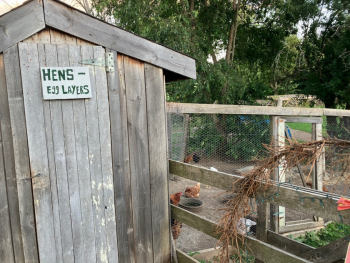
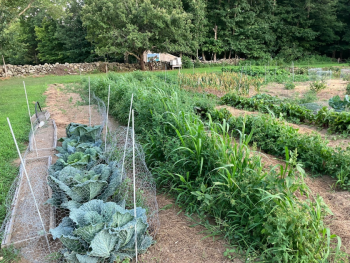
• Products are concentrated on food, primarily fruit and vegetables, but also honey, maple syrup and livestock for meat and eggs. Some farmers have licensed kitchens to produce value-added products.
• Sales approaches range from “you pick” and digital (websites and social media), Community Supported Agriculture (CSA), farm stands, farmers’ markets, and direct selling to restaurants and grocery stores. Larger farms engaged in fewer methods, sometimes wholesale, as in milk and maple syrup.
• They make use of available professional and educational resources, including UMaine Cooperative Extension, the U.S. Department of Agriculture services, Maine Organic Farmers and Gardeners Association and Maine Department of Agriculture.
Areas of primary concern are:
• Legislative, primarily centered on meat and dairy butchering and processing; support for farmers, particularly female farmers, and especially in purchasing equipment.
• Marketing products and networking is welcome, both annually on a big scale and monthly on a smaller scale.
• Financial concerns centered on grants, inflation and managing farm finances.
With new connections to greater Franklin County farmers and their needs, Greater Franklin Food Council has a good start on setting strategic goals.
The full survey report can be found at greaterfranklinfoodcouncil.org.


